
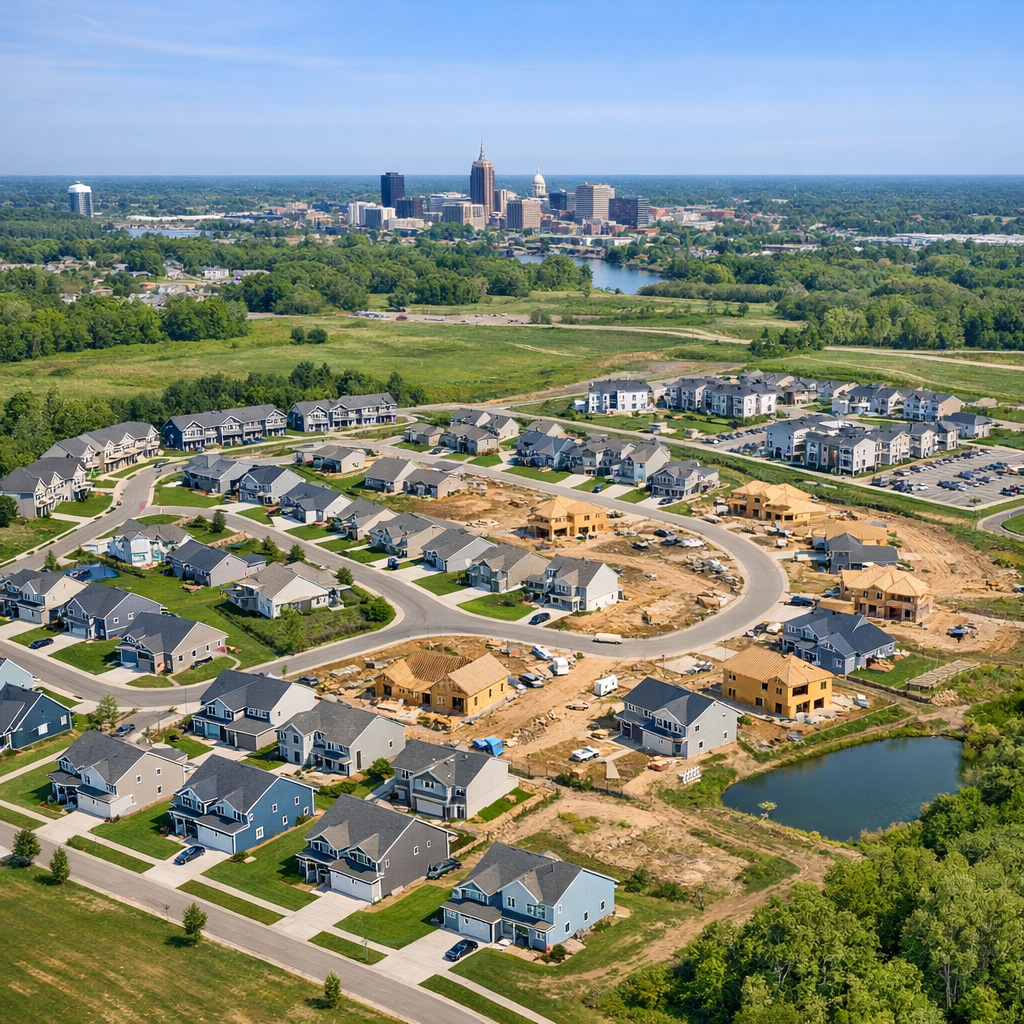
Lansing’s housing market is experiencing notable changes, with rising home values, new developments, and evolving rental dynamics. Here’s an overview to help residents and potential buyers navigate the current landscape.
Market Trends
As of June 2026, the average home value in Lansing stands at $171,397, marking a 2.2% increase over the past year. Homes typically go pending in about eight days, indicating a competitive market. The median sale price is $157,683, with 42.2% of sales closing above the list price. These figures suggest a robust demand for housing in the area.
New Developments
Several housing projects are reshaping Lansing’s residential landscape:
Churchill Gardens
Located on Lansing’s Southside, Churchill Gardens is the city’s first agri-community. This 12-acre development integrates sustainable housing with on-site food production, offering residents access to permaculture gardens and eco-friendly living. The project operates under a Community Land Trust model, ensuring long-term affordability and community stewardship.
New Vision Lansing
This initiative encompasses five mixed-use developments, including the Tower on Grand and Capitol Tower. Collectively, these projects will introduce over 500 residential units and significant commercial space to downtown Lansing, enhancing urban density and vitality. Completion is projected for 2027.
Turner North
In Old Town Lansing, the Turner North development is adding 76 workforce housing units. Designed to complement the historic district’s architecture, this project aims to bolster walkability and support local businesses. Completion is anticipated by 2029.
Rental Market Insights
The average rent in Lansing is $1,230, reflecting a 3.5% year-over-year increase. This remains below the national average of $1,965, making Lansing an attractive option for renters seeking affordability. The rental market’s growth aligns with the city’s expanding housing developments and economic opportunities.
Conclusion
Lansing’s housing market is dynamic, characterized by rising home values, innovative developments, and a growing rental sector. Whether you’re considering buying, renting, or investing, staying informed about these trends is essential for making informed decisions in this evolving landscape.