
By Emily Johnson
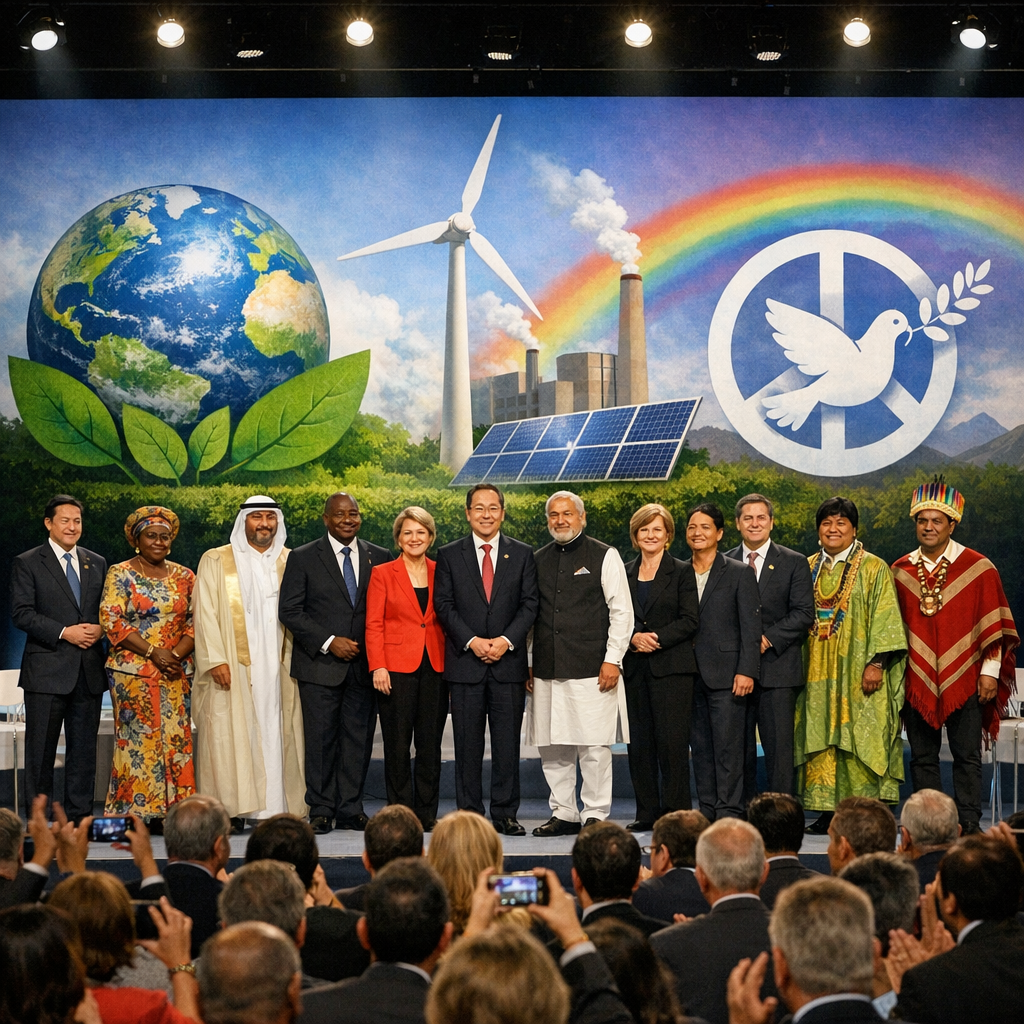
Global events today reflect deep tension and profound challenges—yet also powerful efforts at cooperation and change. From escalating conflicts around the world to renewed urgency in climate action, several major trends are shaping today’s international landscape. Understanding these forces helps us in Lansing—and everywhere—grasp what’s at stake.
Worsening Global Conflict: Patterns and Impacts
A recent report from the Peace Research Institute Oslo reveals that 2025 was one of the most violent years globally since the end of the Cold War. There were 65 active conflicts in 35 countries, high numbers of fatalities, and multiple border disputes turning violent. These are not distant statistics—they affect supply chains, international migration, regional stability, and global economic risk. The wars in Ukraine, Gaza, and Sudan are among those contributing most to the violence. Scale and intensity across many conflicts have increased, as have the numbers of civilians suffering from both direct and indirect consequences. (Conflict trends report, 2025)
Geopolitical Fragmentation
Another major pattern: geopolitical fragmentation. Military spending hit record highs in 2024, driven by major conflicts and posturing among global powers. Trust in international institutions is strained, alliances are recalibrated, and smaller states are caught in patterns of rivalry between larger powers. This trend magnifies the difficulty of coordinated responses to global emergencies—from pandemics to climate disasters.
Climate Action: Progress and Limitations
Amid intensifying global warming and environmental risks, international climate cooperation remains both essential and uneven. The UN’s quarterly climate update highlights gains in technology sharing, adaptation funding, and policy-making. There’s stronger participation in climate finance, and many countries are revising their national climate targets (NDCs) with increased ambition. Voluntary coalitions—of governments, businesses, and sub-national actors—are stepping up efforts to cut emissions and invest in resilience.
Still, the Gap Remains
Even with growing momentum, several critical gaps persist. Many of the revised climate commitments still fall short of what’s needed to limit warming to 1.5°C, as outlined in the Paris Agreement. Agreements around loss and damage, adaptation indicators, and mechanisms to ensure climate justice lag behind. Implementation at the national and local levels—especially in developing regions—often faces funding shortages, capacity constraints, and weak institutional frameworks.
What Lansing—and Similar Communities—Can Learn
Though Lansing is far from many conflict zones and climate hotspots, the impacts are local in ways that matter. Disrupted global energy markets or supply chains can raise costs on basics. Refugee flows and migration may affect communities far from war zones. Local governments, schools, and nonprofits all have roles to play in climate resilience, from retrofitting infrastructure to planning for extreme heat events.
Community-level action—repairing trust locally, investing in clean technologies, supporting affected populations—adds up globally. As national governments grapple with big-picture diplomacy and global cooperation, our decisions in Lansing contribute to shared outcomes.
Looking Ahead: Key Moments to Watch
- Upcoming global climate conferences, including the lead-up to COP meetings, which will influence ambition and funding for adaptation and mitigation.
- Developments in the global conflict landscape—new ceasefires, peace plans, or escalations that could reshape regional security.
- Emerging agreements on climate justice: how funding for vulnerable nations, loss and damage compensation, and equitable transitions evolve.
The tensions and collaborations we see today are shaping the paths nations take—and they will affect every community on Earth. Recognizing the patterns helps us navigate the challenges, hold leaders accountable, and choose action over apathy.